Source High Precision Steel Punch Pins for Automotive, Medical, and Aerospace
Compare 25 listings for high precision steel punch pins suitable for automotive, medical, and aerospace applications. Buyers can evaluate customization options, material specifications, and lead times from verified Chinese manufacturers offering ISO-certified solutions.
Key considerations
Products List




Comprehensive Sourcing Guide
Strategic Sourcing Guide for High Precision Steel Punch Pins
Procuring high precision steel punch pins requires a rigorous approach that balances technical exactness with supply chain reliability. These components are critical in applications ranging from automotive manufacturing to aerospace assembly, where even microscopic deviations can compromise the integrity of the final product. The following guide outlines the essential factors buyers must evaluate when sourcing these specialized tools, drawing upon verified industry standards and observed market attributes to ensure a robust procurement strategy.
Technical Specifications and Dimensional Accuracy
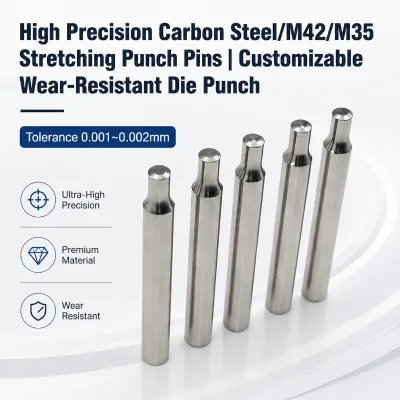
The defining characteristic of high precision punch pins is their ability to maintain dimensional stability under stress and repeated use. When evaluating potential suppliers, buyers must prioritize the tolerance levels and surface finish specifications. Observed market data indicates that high-performance punch pins often feature a Journal Relative Position Accuracy ranging from 0.001mm to 0.005mm. This level of precision is not merely a marketing claim but a functional requirement for applications in robotics, medical devices, and automotive industries.
Buyers should verify that the product model specifications align with their specific drawing requirements. While some suppliers offer standard models like the JG-PP series, the most critical factor is the ability to provide Non-Standard Customization. The "Product Size" should be explicitly defined as "According to Drawing" rather than a fixed catalog size. Furthermore, the surface finish is a crucial technical parameter; grinding processes are commonly employed to achieve the necessary smoothness and hardness. The material composition is equally vital. While some listings mention aluminum or specific coatings, high precision steel pins typically require specific alloy compositions to ensure high hardness and medium to high strength. The "Coating Material" should be selected based on the specific operational environment, with options ranging from standard finishes to specialized treatments for corrosion resistance.
Compliance, Certification, and Material Standards
In the B2B procurement of industrial components, certification serves as the primary proxy for quality assurance. A reliable supplier must possess valid ISO certifications, specifically ISO9001, which validates their quality management systems. Additionally, environmental compliance is increasingly important; certifications such as RoHS ensure that the materials used do not contain restricted hazardous substances. Buyers should also look for evidence of corrosion resistance ratings, which can vary from medium to high depending on the intended application environment.
The material standards must be clearly defined. While some products are described as having "Medium Corrosion Resistance," high-precision applications often demand superior resistance properties. The "Standard Specifications" should be either "Standard Specifications or Customized," allowing for flexibility in meeting international norms. It is essential to verify that the supplier's "Production Origin" is documented, with regions like Jiangsu and Suzhou in China being noted hubs for this manufacturing sector. However, the origin alone does not guarantee quality; the specific factory's adherence to ISO standards and the traceability of the steel alloy used are the true indicators of compliance.
Cost Drivers and Pricing Variables
Understanding the cost structure of high precision punch pins is essential for budgeting and negotiation. The price range in the current market can vary significantly, observed between $0.01 and $20 per unit, depending heavily on the complexity of the design and the volume of the order. Several key factors drive these costs. First, the "Customization" level is a primary driver. Customized products, which require unique tooling and design adjustments, will inherently cost more than standard off-the-shelf items. The "One-time Molding" attribute is noted as "Not One-time Molding" in many contexts, suggesting that the manufacturing process involves reusable tooling, which can affect the initial setup costs versus the per-unit price.
The Minimum Order Quantity (MOQ) is another significant cost variable. The observed MOQ range spans from 1 to 50,000 units. Small orders, often necessary for prototyping or low-volume production, may carry a higher per-unit cost due to setup inefficiencies. Conversely, large-volume orders can leverage economies of scale but require a substantial upfront capital commitment. Buyers should also consider the "Sample Support" availability. While many suppliers offer samples, the cost and lead time for these samples can impact the overall procurement timeline. Additionally, the "Transportation" method, whether by air, sea, or railway, will influence the final landed cost, especially for heavy or time-sensitive orders.
Typical Applications and Industry Suitability
High precision punch pins are versatile components utilized across a diverse array of industries. The "Application" field in supplier data highlights usage in household appliances, automotive machinery, hardware, electronics, and robotics. In the automotive sector, these pins are often integral to the "Automotive Half Shaft Forming Forging" process, where durability and precision are paramount. Similarly, the medical and aerospace industries demand pins with "High Hardness" and strict tolerance levels to ensure patient safety and flight reliability.
The "Craftwork" type, such as the "Long Axis Type," suggests specific geometric requirements that may be necessary for particular machinery configurations. The "Shaft Type" is typically a "Straight Shaft," which is the standard for most punching operations, but buyers must confirm this matches their machine's requirements. The "Product Name" often appears as "Pin Punch" or "Punch Pin," and the "Keywords" associated with these items include "Fastener Die" and "Nut Die," indicating their role in fastening and assembly processes. Buyers should ensure that the supplier has experience in their specific industry, as the "Application" requirements for marine or agricultural equipment differ significantly from those for electronic components.
Supplier Evaluation and Operational Capabilities
Selecting the right supplier involves more than just comparing prices; it requires a deep dive into their operational capabilities and customization support. A strong supplier will offer "OEM & ODM Custom" services, allowing for tailored solutions that fit unique production lines. The "Customized Support" should explicitly include OEM capabilities, ensuring that the supplier can manufacture to the buyer's brand and specifications. The "Main Products" list, which may include Fastener Dies, Nut Dies, Bolt Dies, and Screw Dies, indicates the supplier's breadth of expertise in precision tooling.
Buyers should evaluate the supplier's "Delivery" lead time, which is often stated as "According to The Order Quantity." This variability means that lead times can fluctuate based on production load and order size. A reliable supplier will provide transparent communication regarding these timelines. The "Condition" of the product is typically "New," but buyers should verify the supplier's quality control processes to ensure that no refurbished or substandard items are shipped. The "Product Characteristics," such as "High Hardness," should be backed by verifiable test data or quality reports, rather than just being listed as a generic attribute.
Quality Control and Long-Term Procurement Strategy
Quality control is the backbone of a successful procurement strategy for high precision components. The "Tolerance" must be strictly maintained at "Precision Tolerance" levels, and the "Surface Finish" should be verified through grinding or other finishing processes. The "Warranty" period, often observed as 18 months in the market, provides a safety net for buyers, but it is crucial to understand the terms of this warranty and what constitutes a valid claim.
For long-term procurement, buyers should establish a partnership based on consistent quality and reliable supply. The "Product Packing," which can range from "Carton" to "Plastic Box" or "Customized" packaging, plays a role in protecting the pins during transit. Ensuring that the packaging meets the "Standard Packaging or Customized" requirements is vital for preventing damage. Furthermore, the "Weight" of the product is often "Based on Customed," meaning that buyers should request specific weight data for their custom orders to calculate shipping costs accurately. By focusing on these detailed aspects, buyers can build a resilient supply chain that supports their production goals while maintaining the highest standards of precision and quality.
Comparative Analysis of Product Attributes
To facilitate decision-making, the following table summarizes key attributes observed in the market for high precision steel punch pins. This comparison helps buyers quickly identify the critical differentiators between standard and custom solutions.
| Attribute Category | Standard / General Offering | High Precision / Custom Offering |
|---|---|---|
| Certification | ISO | ISO9001, RoHS |
| Tolerance | Standard | Precision Tolerance (0.001-0.005mm) |
| Material | Generic Steel | Specific Alloy, Coated per Requirement |
| Customization | Limited | Full OEM/ODM, Non-Standard Sizing |
| Surface Finish | Basic | Grinding, High Hardness |
| Application | General Hardware | Automotive, Medical, Aerospace, Robotics |
| Packaging | Standard Carton | Plastic Box or Custom Requirement |
| Lead Time | Fixed | According to Order Quantity |
| Warranty | Variable | Typically 18 Months |
This table underscores the importance of moving beyond generic specifications when sourcing for critical applications. The shift from standard to high precision involves significant changes in material science, tolerance control, and supplier capability. By carefully analyzing these attributes, buyers can make informed decisions that align with their technical requirements and business objectives.
Conclusion
Sourcing high precision steel punch pins is a complex task that demands a thorough understanding of technical specifications, compliance standards, and supplier capabilities. Buyers must navigate a landscape where customization, tolerance, and material quality are paramount. By adhering to the guidelines outlined in this guide, procurement professionals can mitigate risks, ensure product quality, and establish long-term partnerships with suppliers who can meet the rigorous demands of modern manufacturing. The focus on verified data, such as specific tolerance ranges and certification standards, ensures that the final procurement decision is grounded in reality rather than marketing claims.
FAQs
What certifications do high precision steel punch pins have?
These pins typically hold ISO and ISO9001 certifications to ensure quality management standards. Some listings also include RoHS compliance for environmental safety. Buyers should verify specific certificates match their industry requirements before ordering.
How is the precision tolerance defined for these pins?
High precision models feature a Journal Relative Position Accuracy ranging from 0.001 to 0.005mm. This tolerance level is critical for applications in robotics, medical devices, and automotive industries where exact dimensions are mandatory.
Can I get custom sizes for these punch pins?
Yes, non-standard customization is available based on specific drawings or requirements. Suppliers offer OEM and ODM support to tailor the product size and specifications to your unique production needs rather than just offering fixed catalog sizes.
What is the typical delivery time for these orders?
Delivery time is determined according to the order quantity rather than a fixed calendar date. Buyers should expect lead times to vary based on production load and the specific volume of the custom or standard order placed.
Which industries commonly use these high precision pins?
These pins are widely used in automotive, aerospace, medical, robotics, and marine industries. Their high hardness and precision make them suitable for applications ranging from household appliances to complex machinery assembly and forging processes.
What warranty is provided for these steel punch pins?
The standard warranty period observed in the market is 18 months for these products. This coverage applies to defects in material or workmanship, ensuring reliability for buyers in critical manufacturing sectors requiring long-term component performance.